
Understanding the Service Life and Lifespan of LPG Steel Cylinders
Introduction
How long does an LPG cylinder last? For distributors and gas companies searching for a reliable LPG gas cylinder in Kenya, the answer depends on manufacturing quality, operating conditions, maintenance and mandatory requalification.
A well-manufactured steel cylinder may remain in service for many years. However, there is no single lifespan that applies to every cylinder. Corrosion, impact damage, poor storage and inadequate inspection can shorten its usable life.
For LPG distributors, choosing durable cylinders is only the first step. A sound fleet-management programme must also track cylinder condition, inspection dates and units removed from circulation.
Average Lifespan of a High-Quality LPG Cylinder: 15–20 Years
A service life of 15–20 years can be used as a general planning reference, but it is not a guaranteed lifespan or a universal regulatory limit. Actual service life depends on the cylinder design, manufacturing specification, environmental exposure, handling practices and inspection results.
Some cylinders may need to be removed from service earlier because of damage or failed inspection. Others may remain suitable for longer if they meet the applicable requirements throughout their service life.
The important distinction is between a cylinder’s chronological age and its approved service condition.
A cylinder that looks new may have hidden defects. Likewise, an older cylinder should not be judged by appearance alone. Its identification, inspection history and current condition matter.
For LPG distributors in Kenya, procurement decisions should consider three questions:
Was the cylinder manufactured to the applicable standard? Review the relevant specifications and quality documentation.
Has it been maintained and inspected correctly? Check its service and requalification records.
Is it still approved for use? Follow the applicable Kenyan requirements and inspection procedures.
The ISO 22991 standard for LPG cylinder design and construction covers material, design, construction, workmanship and manufacturing tests for specified transportable refillable welded-steel cylinders. It provides an important technical reference, but it does not establish a universal 15–20-year service life.
For buyers comparing suppliers, our guide to LPG cylinder safety standards and quality control in Kenya explains why specifications, inspection and traceability should be evaluated together.
Key Factors That Determine LPG Cylinder Longevity
A cylinder’s lifespan is influenced by several connected factors. Strong steel alone is not enough if welding, corrosion protection, transportation or handling is inadequate.
Steel Grade and Initial Welding Quality
Steel quality and manufacturing workmanship establish the cylinder’s structural foundation.
The selected material must meet the applicable specification for the cylinder’s intended design and service conditions. Material traceability and appropriate production controls help manufacturers verify that the cylinder is built according to its requirements.
Welding quality is equally important. Welds must meet the applicable manufacturing criteria, and the inspection plan should identify defects that could compromise structural integrity.
For a new cylinder procurement project, buyers should ask about:
Material specifications and relevant inspection records.
Welding procedures and production quality controls.
Dimensional checks and applicable manufacturing tests.
Identification and batch traceability.
Documentation demonstrating conformity with the agreed requirements.
These checks help establish a reliable starting point for service life. They do not eliminate the need for subsequent inspection and correct handling.
Read our guide to why LPG cylinder welding quality matters for more information about the relationship between weld integrity and cylinder reliability.
Surface Treatment: Shot Blasting and Zinc or Powder Coating
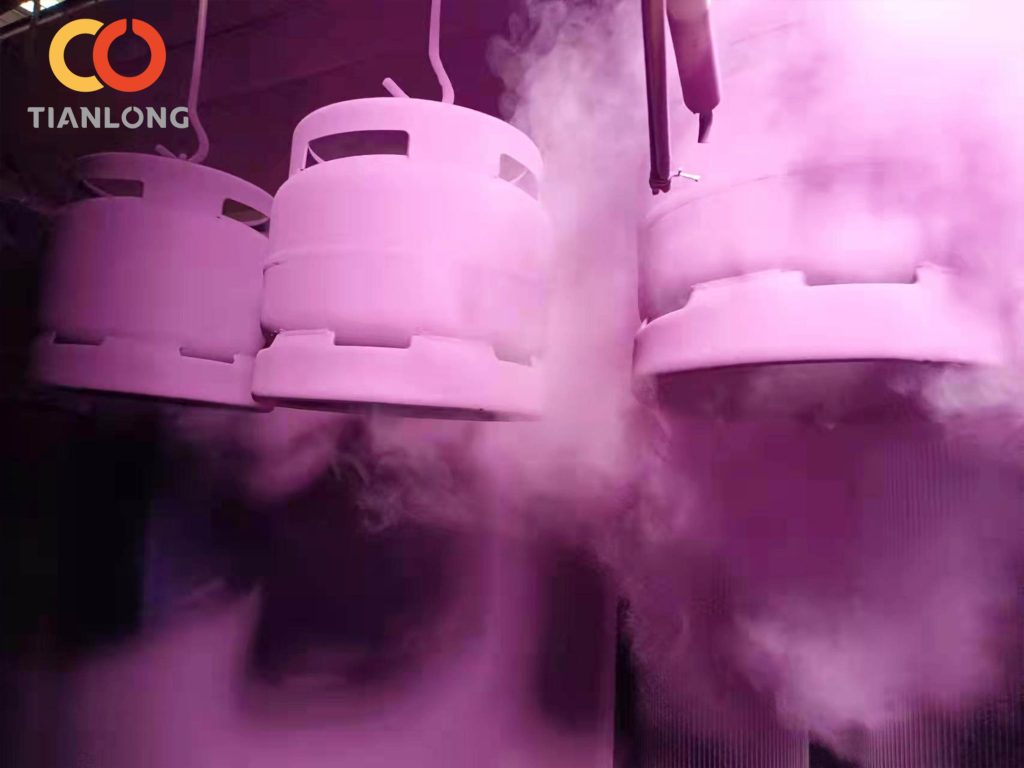
Corrosion protection plays an important role in extending the useful life of steel LPG cylinders.
Moisture, damaged coatings, salt exposure and unsuitable storage can accelerate external corrosion. If corrosion progresses, the cylinder may require closer assessment to determine whether it remains suitable for service.
Surface preparation helps coating systems adhere properly. Depending on the agreed manufacturing process, preparation may include shot blasting or another specified cleaning method to remove contaminants and prepare the steel surface.
A typical coating process may include:
Surface preparation: Remove rust, scale and contaminants using the specified process.
Surface inspection: Check cleanliness and surface condition before coating.
Coating application: Apply the specified protective system under controlled conditions.
Curing: Where powder coating is used, cure it according to the coating manufacturer’s process requirements.
Final inspection: Assess coating coverage, appearance and other agreed acceptance criteria.
Zinc-based protection and powder coating serve different purposes. Zinc coatings can provide sacrificial corrosion protection, while powder coatings provide a protective finish. Their suitability depends on the design, process and environmental requirements.
Neither coating makes a cylinder immune to corrosion. Scratches, impacts and prolonged exposure to moisture can still damage the protective layer.
For more detail, see our article on LPG cylinder powder coating and surface preparation.
Environmental Conditions and Handling Practices
The operating environment can significantly influence cylinder longevity.
In coastal locations, salt-laden air may accelerate corrosion when protective coatings are damaged. In humid environments, poor ventilation and persistent moisture can also increase corrosion risk.
Handling practices matter just as much. Repeated impacts, dragging cylinders across rough surfaces and unsuitable stacking can damage coatings or cause deformation.
To help preserve cylinder condition, LPG businesses should:
Store cylinders in suitable, well-ventilated areas according to applicable safety requirements.
Protect cylinders from unnecessary moisture and corrosive contamination.
Use suitable equipment and procedures for handling and transportation.
Avoid dropping, dragging or striking cylinders.
Inspect for dents, bulging, corrosion and coating damage.
Remove suspect cylinders from circulation for assessment rather than repainting them immediately.
A damaged coating may be repairable under an appropriate procedure. Structural damage, however, requires assessment against the applicable acceptance criteria.
For distributors, a simple inspection and maintenance record can help identify recurring damage patterns and improve handling practices across the fleet.
The Role of Requalification: Follow the Applicable Inspection Interval
Periodic inspection and requalification help determine whether a refillable LPG cylinder remains suitable for continued service. They are not optional substitutes for routine care, nor should they be confused with repainting alone.
The applicable inspection interval depends on the relevant national requirements, cylinder standard and approved procedures.
For Kenya, do not automatically apply a five-year interval to every LPG cylinder. Kenya’s Petroleum (Liquefied Petroleum Gas) Regulations, 2025, contain provisions for requalification, including an eight-year threshold from manufacture in specified regulatory circumstances. The full requirements and their application should be checked against the current regulations and relevant cylinder standard.
The Kenya Bureau of Standards also lists KS 9-4:2018, which addresses requalification and inspection of refillable welded low-carbon-steel LPG cylinders within its stated capacity scope. Buyers and operators should consult the applicable standard to establish the correct procedure and interval for their cylinders.
The international reference ISO 10464:2004 addresses periodic inspection and testing of specified refillable welded-steel LPG cylinders. Its applicability should be assessed alongside Kenyan requirements rather than treated as an automatic replacement for national rules.
What Does Requalification Involve?
Depending on the applicable requirements and the cylinder’s condition, the requalification process may involve:
Checking cylinder identification and inspection history.
Assessing external condition and signs of damage or corrosion.
Examining relevant structural areas and welds.
Carrying out specified repairs where permitted.
Inspecting or replacing valves as required.
Performing the prescribed pressure test and other required checks.
Repainting or restoring the protective finish where required.
Recording the inspection outcome and requalification date.
Not every cylinder will require identical work. The approved procedure and inspection findings determine the necessary steps.
A cylinder that fails the applicable acceptance criteria must not be returned to circulation simply because it has been cleaned, repainted or fitted with a replacement valve.
Requalification and Fleet Management for Kenyan LPG Businesses
LPG distributors should maintain records that connect each cylinder’s identity with its service and inspection history.
Useful records include the cylinder serial number, manufacturer, acquisition date, relevant inspection or requalification dates, maintenance history and current status.
These records help businesses identify cylinders approaching inspection deadlines, isolate units requiring assessment and plan replacements before shortages occur.
The EPRA LPG Regulations, 2025 should be consulted for the applicable Kenyan regulatory obligations. Operators should confirm the requirements relevant to their licence, role and cylinder fleet.
The practical objective is straightforward: keep only suitable cylinders in circulation, document their condition and replace units that cannot meet the required standards.
Premium Manufacturing Standards at Tianlong Kenya
Long service life begins with an appropriate design, controlled manufacturing and a protective finish suited to the intended operating environment. However, no responsible manufacturer should guarantee a fixed lifespan without considering actual service conditions.
Tianlong’s Kenya manufacturing facility in Tatu City, Ruiru, focuses primarily on 6kg and 13kg LPG steel cylinders. For distributors and gas companies, procurement should begin by matching cylinder specifications with the intended market, applicable standards and distribution requirements.
When assessing a new-cylinder supplier, buyers should consider the following.
1. Confirm Materials and Manufacturing Specifications
Ask for the product specification, applicable standard and relevant manufacturing documentation. Confirm the cylinder capacity, valve configuration, markings and other technical requirements before production.
2. Review Welding and Quality Controls
Discuss how the manufacturer controls welding quality, dimensional accuracy and the required production tests. The agreed inspection plan should define the acceptance criteria and supporting records.
3. Evaluate Corrosion Protection
Ask how the steel surface is prepared and which coating system is specified. Where powder coating is used, confirm the relevant application, curing and final-inspection requirements.
For projects exposed to humid or coastal conditions, discuss the intended environment when defining the surface-protection specification.
4. Confirm Identification and Traceability
Clear identification and reliable records support cylinder tracking throughout its service life. Confirm the required serial numbers, markings and documentation before the order is finalized.
5. Plan for Inspection and Replacement
Even a well-manufactured cylinder requires proper handling and inspection. Distributors should establish a system for recording condition, monitoring requalification dates and removing damaged units from circulation.
For broader procurement guidance, read our article on how LPG cylinders are manufactured.
The best purchasing decision considers both manufacturing quality and the systems needed to maintain cylinders after delivery. This approach helps LPG businesses manage fleet condition, plan replacement budgets and reduce avoidable losses.
Order Long-Lasting LPG Cylinders – Contact Tianlong Kenya
Planning to launch an LPG distribution business or expand an existing cylinder fleet in Kenya? Tianlong can discuss your required cylinder specifications, quantities, branding and supply arrangements.
When requesting a quotation, prepare the following details:
Required capacities, particularly 6kg and 13kg where suitable.
Estimated order quantity and expected fleet growth.
Valve configuration and applicable product standards.
Branding, identification and coating requirements.
Delivery destination and preferred schedule.
Order Long-Lasting LPG Cylinders – Contact Tianlong Kenya to discuss your procurement requirements.
A long-lasting LPG cylinder is the result of suitable design, quality manufacturing, effective corrosion protection, careful handling and timely requalification. Choosing the right supplier is the first step; maintaining the fleet correctly is what supports reliable service over time.
Frequently Asked Questions
How many years does an LPG steel cylinder last?
A period of 15–20 years can serve as a general planning reference, but it is not a guaranteed lifespan. Actual service life depends on the cylinder specification, environment, handling, maintenance and inspection results.
Do LPG cylinders in Kenya need requalification every five years?
Do not assume a universal five-year interval. Kenyan requirements include an eight-year threshold from manufacture in specified regulatory circumstances, while the applicable standard and cylinder requirements must also be checked. Follow the current rules for the particular cylinder.
Does powder coating make an LPG cylinder last longer?
A suitable, properly applied coating can help protect steel against corrosion. However, coating performance depends on surface preparation, application, curing, handling and environmental exposure. Coating cannot compensate for structural defects.
What can shorten an LPG cylinder's service life?
Corrosion, dents, deformation, damaged welds, unsuitable storage, repeated impacts and poor maintenance can reduce service life. Suspect cylinders should be assessed under the applicable procedures.
Can an old LPG cylinder continue to be used?
Age alone does not determine whether a cylinder can remain in service. Its identification, condition, inspection results and compliance with the applicable requirements determine whether it can be accepted for continued use.
Which LPG cylinder sizes does Tianlong Kenya primarily manufacture?
Tianlong’s Kenya facility focuses primarily on 6kg and 13kg LPG steel cylinders. Confirm availability, technical specifications and applicable conformity requirements for your project.